Quick answer: For routine care, leave the chain on the bicycle. Remove dirt with a cloth and brush, using a cleaner approved for your drivetrain when needed. Follow its rinsing instructions, let the chain dry, apply bicycle chain lubricant to the rollers, and wipe away excess according to the lubricant’s directions. Keep all lubricant away from brakes. Cleaning cannot repair a worn or damaged chain. (campagnolo.com)
1. Know what this routine covers—and when to stop
This guide covers ordinary exposed metal bicycle chains, using an on-bike cleaning routine and a drip lubricant. The chain is part of the drivetrain: the components that transfer your pedaling to the rear wheel.
Routine care does not require opening the chain’s connecting link. Campagnolo’s maintenance instructions explicitly say to leave the chain installed for cleaning and lubrication. SRAM also notes that opening the PowerLock connecting link during deeper cleaning requires a new PowerLock. Avoid turning a simple cleaning job into unnecessary disassembly. (campagnolo.com)
Before cleaning, look for cracked or bent chain plates and consider any recent skipping or unexpected gear changes. Shimano directs riders to seek dealer assistance for these problems. Do not use fresh lubricant as a reason to keep riding a visibly damaged or repeatedly skipping chain. (si.shimano.com)
The procedure below is not a derailleur-adjustment guide, a belt-drive maintenance procedure, or a method for switching to immersion wax. If your chain already uses a wax system, follow that system’s care instructions rather than adding oil indiscriminately. SRAM specifically defers to the wax manufacturer’s application guidance. (docs.sram.com)
2. Gather simple supplies and choose compatible products
Set out:
- Clean, lint-free cloths: one for dirt and another for the final wipe.
- A small cleaning brush.
- A drivetrain-compatible cleaner, if brushing and wiping are insufficient.
- Water, where the cleaner’s instructions require rinsing.
- A bicycle chain lubricant in a controlled drip bottle.
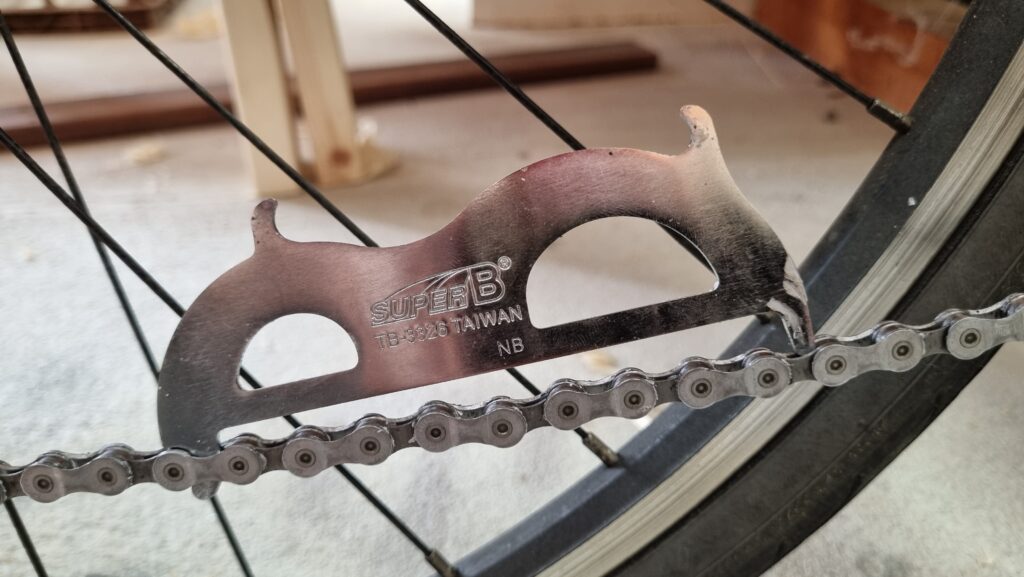
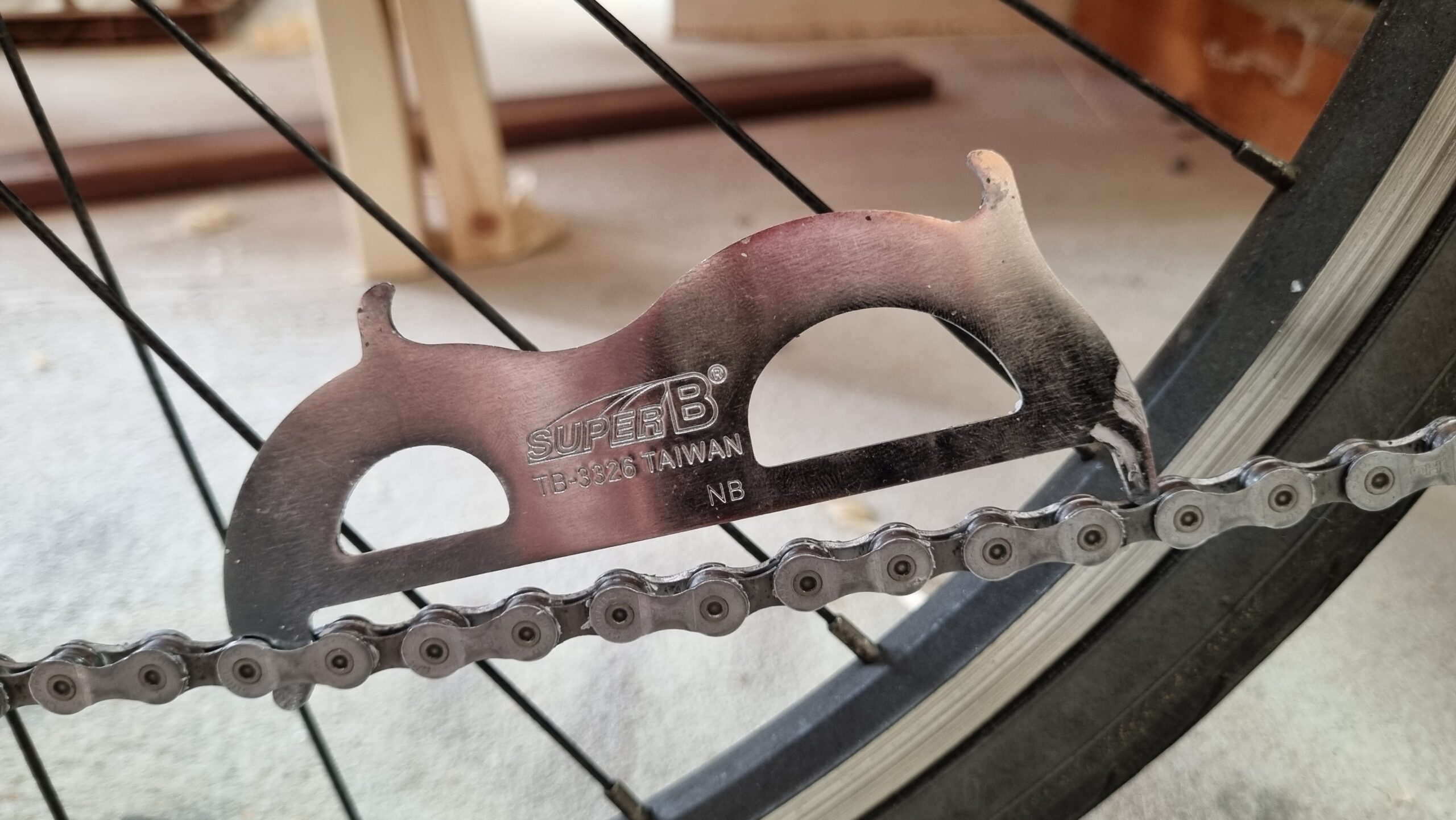
- A compatible chain-wear gauge, if you have one.
A stand can make access easier, but the bicycle must be stable however you support it. Keep loose clothing, fingers and cloth edges away from sprocket teeth and other moving parts. Shimano warns about sharp chainring teeth and clothing becoming caught in the chain. (bike.shimano.com)
Do not assume any household degreaser is suitable. Shimano warns against acidic and alkaline solvents, including rust cleaners. Campagnolo specifies neutral detergent and advises avoiding degreasers for the chains covered by its manual. SRAM’s cleaner guidance likewise prohibits acidic or alkaline solvents and soaking. The exact component manual takes priority over a general cleaning tutorial. (si.shimano.com)
For lubricant, consider both conditions and component instructions. Shimano describes dry lubricants as an option for dry conditions and wet lubricants as better able to remain on the chain in rain, although wet lubricant attracts contaminants that require cleaning. SRAM specifically recommends wet lubricant in its Eagle chain-care guidance. “Dry weather” therefore does not automatically override your chain manufacturer’s recommendation. (bike.shimano.com)
3. Clean the chain without taking it off
Work methodically rather than flooding the drivetrain with cleaner.
- Wipe the outside first. On a conventional freewheeling bicycle, slowly turn the pedals backward by hand to bring successive sections within reach. Use a cloth to remove loose dirt, keeping it clear of the gears.
- Brush remaining grime. If needed, use a brush or cloth with the approved cleaner, following its dilution and contact-time directions.
- Clean neighboring contact surfaces. Remove accessible grime from the front chainring, rear sprockets and derailleur pulley wheels—the small wheels that guide the chain. Do not dismantle them for this routine.
- Rinse as directed. Keep dirty runoff and cleaning products away from the brakes.
- Dry before lubricating. Wipe off water and allow remaining moisture to dry. (bike.shimano.com)
Avoid prolonged soaking or an improvised overnight solvent bath. SRAM’s drivetrain cleaner guidance says not to soak or store the chain or cassette in cleaning products. Its electronic-component instructions also prohibit power washing. Controlled brushing and wiping are a more manageable starting point for beginners. (support.sram.com)
If turning the pedals backward does not move your chain freely, stop rather than forcing it. Use your bicycle’s instructions or ask a mechanic how to position it for maintenance.
4. Lubricate the rollers, then remove the excess
The rollers are the small cylinders between the chain’s side plates. Lubricant needs to reach the moving interfaces inside the chain, not simply leave its outer surfaces shiny. Campagnolo specifies applying lubricant drop by drop to each roller so it can penetrate toward the pin inside. (campagnolo.com)
For an ordinary drip lubricant:
- Locate a recognizable starting link, such as the connecting link.
- Apply a controlled drop to each roller along the accessible lower chain section.
- Move the chain slowly by hand and continue until the starting link returns.
- Rotate the drivetrain to distribute the lubricant.
- Observe the product’s waiting instructions, then wipe excess from the outside with a clean, lint-free cloth. (campagnolo.com)
There is no universal waiting time. SRAM notes that some lubricants need a specified period before riding or removing excess. Check the bottle rather than assuming that immediate wiping—or leaving it overnight—is always correct. Directly oiling the rear sprockets is unnecessary in SRAM’s described lubrication routine. (docs.sram.com)
Keep lubricant off disc rotors, rim-braking surfaces and brake pads. A drip bottle gives better control than spraying near the wheel. Campagnolo warns that spray oil can reach brake pads; SRAM explains that oil contamination of disc pads can drastically reduce braking power. If contamination is suspected, stop and seek brake-specific guidance or a mechanic rather than trying to “ride it clean.” (campagnolo.com)
5. Check rust, stiff links and recurring noise
Inspect the chain again once dirt no longer hides its surfaces.
Rust: Look for orange-brown corrosion, rough areas and links that no longer move freely. Do not reach for an acidic rust remover: Shimano explicitly warns against rust-cleaning solvents on the chain. If corrosion is substantial or you cannot distinguish staining from damaged metal, have the chain assessed before riding. A clean appearance alone cannot establish its condition. (si.shimano.com)
Stiff links: Slowly move the chain and watch whether its links bend consistently as they pass around the drivetrain. A joint that remains kinked instead of articulating needs attention. Park Tool includes checking for tight links after chain installation; beginners should seek help for persistent stiffness rather than experimenting with chain pins or forcing the link. (parktool.com)
Noise and skipping: Inadequate lubrication can cause abnormal noise, but wear and other drivetrain problems can also affect operation. If cleaning and correct lubrication do not resolve the issue, stop adding oil and investigate. Repeated skipping deserves professional assessment, not a random turn of the derailleur’s adjustment screws. (campagnolo.com)
6. Measure wear with the right tool—not appearance
A chain can look clean and still be worn. What riders call chain “stretch” largely reflects wear in its internal components. This changes how it meshes with the gears and can contribute to poor shifting and premature sprocket wear. (parktool.com)
A chain-wear gauge is useful, but the gauge must suit the chain. Roller dimensions, built-in clearance and the tool’s measuring design affect readings. For example, Park Tool says its CC-2 is incompatible with SRAM Flattop and T-Type chains. It also notes that the CC-2 can show a nonzero reading on a new chain because of normal clearance—not because that chain is already worn by the displayed amount. (parktool.com)
Use this sequence:
- Identify the chain model or drivetrain.
- Confirm the gauge manufacturer lists it as compatible.
- Follow the tool’s placement, tension and reading instructions.
- Check more than one chain location where the component instructions call for it.
- Compare the result with the chain manufacturer’s replacement limit. (parktool.com)
Park Tool gives general replacement guidance of 0.75% for 5–10-speed chains and 0.5% for 11–13-speed chains, while warning that manufacturers can specify different limits. These are not universal rules. Campagnolo, for example, specifies a particular caliper-measurement method for the chains in its cited manual. (parktool.com)
Worked example: Suppose an 11-speed chain’s manufacturer specifies replacement at 0.5%, and a compatible gauge confirms it has reached that limit. Cleanliness and quiet operation do not cancel the measurement: arrange replacement. If you are unsure about the reading or compatibility, ask a shop to confirm it before buying parts.

7. Adapt the routine to dust and rain
There is no dependable universal mileage or weekly schedule. Shimano and SRAM both say maintenance needs depend on use and riding conditions. SRAM recommends cleaning after muddy, dusty or other adverse riding conditions. (si.shimano.com)
Example: a dusty recreational bicycle
After a dry path ride, inspect for grit and wipe the chain. If dirt remains around the rollers, use the compatible cleaning routine before relubricating. Do not keep layering lubricant over dirty residue. When permitted by the component maker, a dry-condition lubricant may be suitable; still follow its preparation and reapplication instructions. (bike.shimano.com)
Example: a rain-exposed commuter
After a wet, gritty journey, clean off contamination, dry the chain and replenish lubricant as directed. An appropriate wet lubricant may suit repeated rain exposure, but it does not eliminate cleaning: Shimano notes that dirt sticks to oil-based wet lubricant. Campagnolo also emphasizes cleaning, drying and relubricating exposed components after damaging environmental exposure. (bike.shimano.com)
These are decision examples, not promises about chain life. Neither riding distance nor appearance alone replaces inspection and wear measurement.
8. Avoid common mistakes and finish with practical checks
Before putting the supplies away, check that:
- The chain moves without a persistent kink or jam.
- No visible plate damage has been uncovered.
- Excess lubricant has been removed as directed.
- Braking surfaces have stayed free of lubricant.
- Any wear reading has been interpreted using compatible instructions. (si.shimano.com)
The most avoidable mistakes are using an incompatible cleaner, opening a connecting link unnecessarily, lubricating before the chain dries, ignoring the lubricant’s waiting time, and treating one wear threshold as correct for every chain. (support.sram.com)
Takeaway: Clean off contamination, dry the chain, lubricate its rollers and wipe away excess. Then inspect and measure. Routine care maintains a serviceable chain; it does not make a damaged or worn-out one serviceable again.